

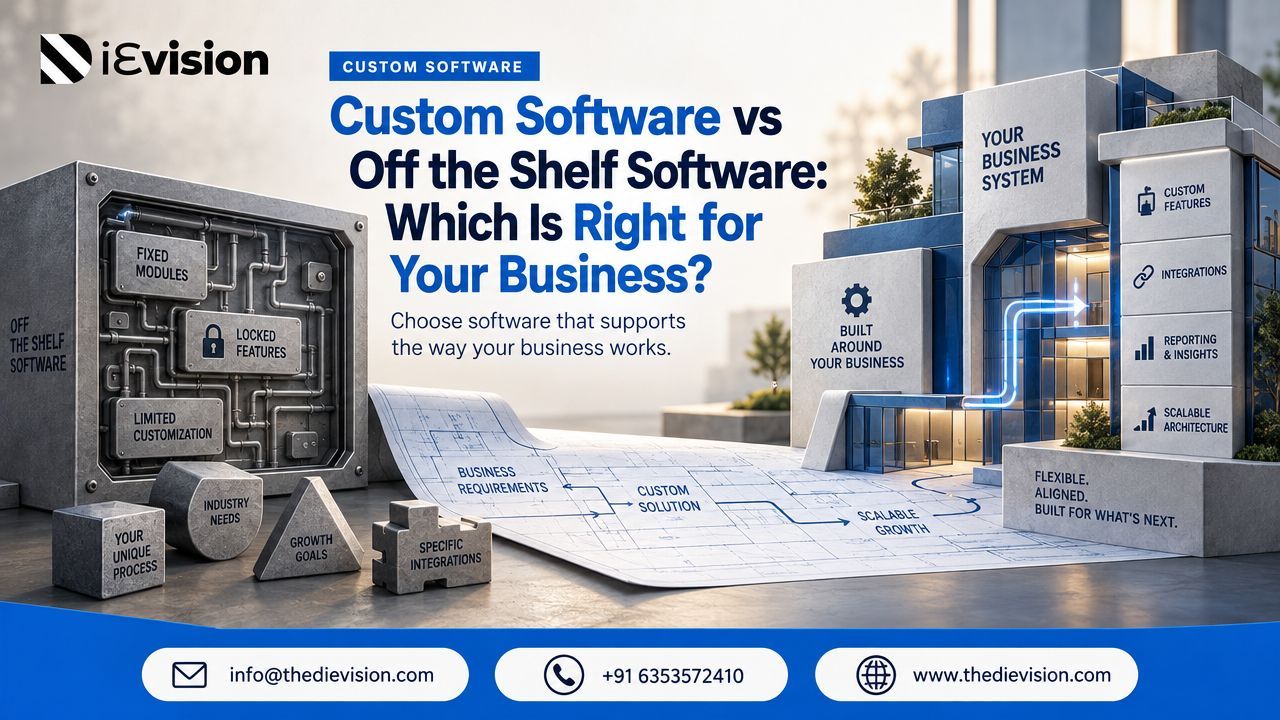
Custom Software vs Off the Shelf Software: Which Is Right for Your Business?
Compare custom and ready made software to choose the best solution for your processes, budget, integrations and future growth.
Choosing business software is not simply a technical decision. The system you select can influence how efficiently your team works, how customers experience your services and how easily your company can grow.
Most businesses have two options. They can purchase ready made software or invest in a custom solution built around their specific requirements. Both options have advantages, but the right choice depends on your processes, goals and budget.
What Is Off the Shelf Software?
Off the shelf software is a ready made product created for a broad group of users. Accounting platforms, project management tools, customer relationship management systems and payroll applications are common examples.
These products are usually available through a monthly or annual subscription. Businesses can create an account, configure basic settings and begin using the software quickly.
This option works well when your requirements are common and the available features closely match the way your team operates. It can also be suitable for smaller businesses that need a quick and affordable solution.
However, ready made software may include features you never use while missing functions that are important to your business. Your team may eventually need to adjust its processes to fit the software.
What Is Custom Software?
Custom software is designed and developed specifically for one business. Its features, workflows, integrations and user access rules are built around the organisation’s actual requirements.
For example, a company may need a system that combines lead management, quotations, order tracking, inventory and customer communication. Instead of using several disconnected applications, custom software can bring these processes into one platform.
Custom development requires more planning and a higher initial investment. However, it gives the business greater control over how the system works and how it evolves.
Cost and Implementation Time
Off the shelf software usually has a lower starting cost. Because the product already exists, implementation can take a few days or weeks. This makes it attractive when a business needs an immediate solution.
The long term cost can be different. Subscription fees may increase as more employees, features or storage are added. Businesses may also need to pay for separate tools, integrations and manual workarounds.
Custom software takes longer to design and develop because it is built from the ground up. The initial cost is higher, but the business is paying for features that directly support its operations.
Flexibility and Scalability
Ready made software normally offers predefined features and limited customisation. Businesses can change settings, templates and basic workflows, but they cannot always modify the core product.
This may become a problem when the company grows or introduces a new service. The software may no longer support the way the business needs to operate.
Custom software can be expanded as requirements change. New features, integrations and workflows can be introduced without replacing the entire system. This makes it a strong option for businesses with specialised or evolving processes.
Integration With Existing Systems
Most businesses already use several digital tools. New software must work with these systems to avoid duplicate data entry and disconnected information.
Popular ready made products may offer standard integrations. However, these connections may not support every process or data requirement.
Custom software can be designed to connect with existing CRMs, accounting platforms, websites, payment systems and internal tools. This helps information move smoothly across the organisation.
Security and Control
With off the shelf software, the provider controls the platform, updates and security policies. Reputable providers can offer strong protection, but businesses have limited control over how the system is managed.
Custom software provides more control over hosting, user permissions, data access and security requirements. However, the business must work with a reliable development partner to maintain and protect the solution properly.
Which Option Should You Choose?
Off the shelf software may be right if your requirements are standard, your budget is limited and you need to begin quickly.
Custom software may be a better choice if your processes are unique, your existing tools are disconnected or standard software is forcing your team to use inefficient workarounds.
Before deciding, review your workflows and identify the problems the software must solve. Consider not only the initial cost, but also long term subscriptions, manual work, integration limitations and future growth.
The best software should support the way your business works instead of making your business work around the software.
DieVision Infotech develops custom software solutions designed around real business processes. Visit www.thedievision.com to discuss a solution that fits your operations and growth plans.